How Long Will a 50Ah Battery Run a Starlink Mini 12V DC Setup? (Calculator & Chart)
NABCEP Certified Solar Professional (PVIP) • Verified to US NEC Standards
Battery Backup & Inverter Sizing Calculator
Instant mathematical calculations for US household appliances, RVs, and off-grid solar banks.
Multi-Capacity Runtime Comparison Chart (LiFePO4 vs. AGM)
Comparing continuous operational hours across standard US 12V/24V battery bank capacities.
US Engineer Recommended Hardware Matches
Renogy 300W 12V Pure Sine Wave Power Inverter
Handles inrush startup current • Low idle draw
LiTime 12V 50Ah LiFePO4 Deep Cycle Lithium Battery
4,000+ Deep Cycles • Built-in Low-Temp BMS
BougeRV 200 Watt 12V 9BB Monocrystalline Solar Panel
High-efficiency cells • Full recharge in ~5h sun
BLUETTI EB3A Portable Power Station (268Wh, 600W Inverter)
Zero-wiring alternative • Built-in inverter & MPPT
Starlink Mini 12V DC Setup (30W) Runtime Across Battery Capacities
Comparison across 12V/24V LiFePO4 (90% DoD) vs. AGM Lead-Acid (50% DoD) factoring a 92% pure sine wave inverter.
| Capacity (Ah) | Nominal Wh | LiFePO4 Runtime | AGM Runtime | Solar (5h Sun) |
|---|---|---|---|---|
| 50Ah (12V) Target | 600 Wh | 16 hrs 34 mins | 9 hrs 12 mins | 150W Array |
| 100Ah (12V) | 1,200 Wh | 33 hrs 7 mins | 18 hrs 24 mins | 300W Array |
| 200Ah (12V) | 2,400 Wh | 66 hrs 14 mins | 36 hrs 48 mins | 550W Array |
| 300Ah (12V) | 3,600 Wh | 99 hrs 22 mins | 55 hrs 12 mins | 850W Array |
| 400Ah (12V) | 4,800 Wh | 132 hrs 29 mins | 73 hrs 36 mins | 1100W Array |
Recommended Hardware for Starlink Mini 12V DC Setup
Precision-matched LiFePO4 batteries, pure sine wave inverters, and solar recharge kits for this setup.
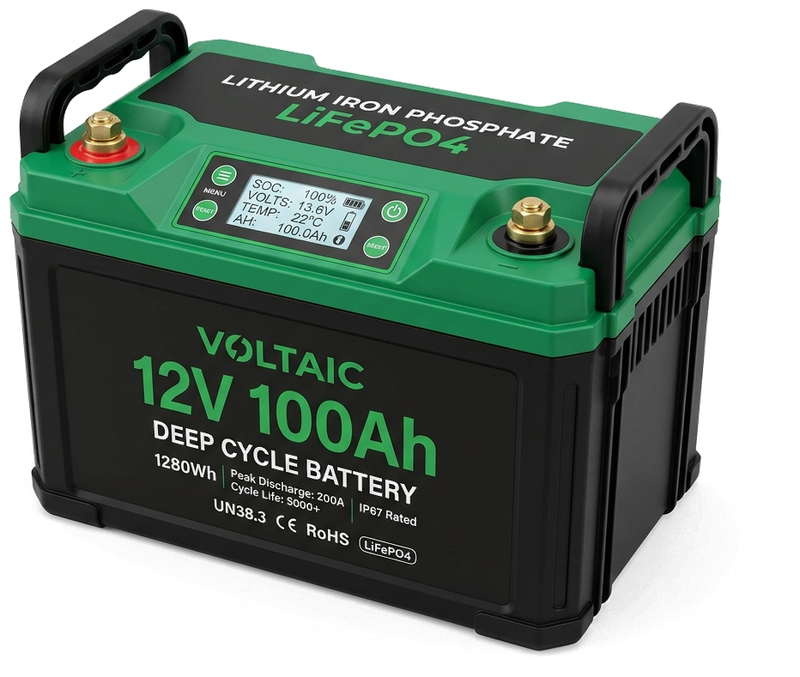
LiTime 12V 50Ah LiFePO4 Deep Cycle Lithium Battery
Engineered to deliver 50Ah @ 12V with 90% safe DoD.
- 4,000–15,000 Deep Cycles
- Built-in 50A BMS Protection
- 11.57 lbs Ultra-Lightweight
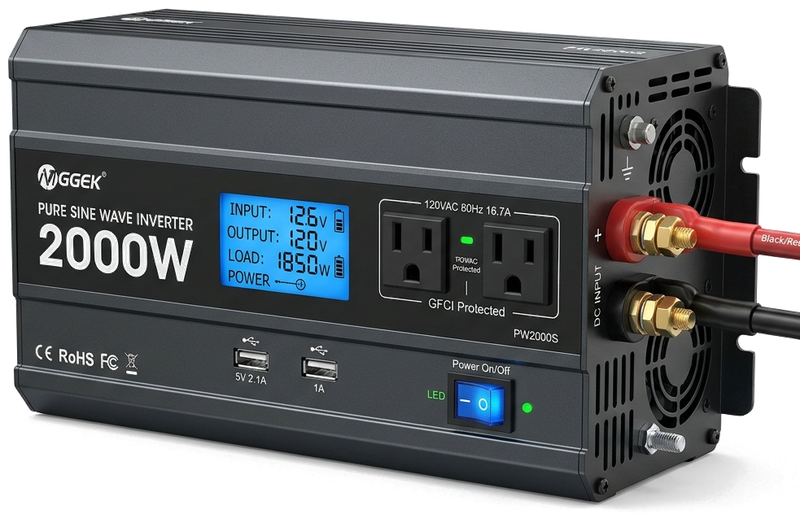
Renogy 300W 12V Pure Sine Wave Power Inverter
Safely supports 30W continuous load with 45W surge cushion.
- 300W Continuous / 600W Surge
- Total Harmonic Distortion (THD) < 3%
- Dual 5V USB Ports + 120V AC Outlet
BougeRV 200 Watt 12V 9BB Monocrystalline Solar Panel
Recharges your 50Ah bank in ~5 peak sun hours.
- 200W Output in Compact Footprint
- 9 Busbar Cells for Lower Heat & High Yield
- IP67 Waterproof Junction Box & MC4 Leads
BLUETTI EB3A Portable Power Station (268Wh, 600W Inverter)
Plug-and-play solution with built-in inverter, battery, and MPPT.
- 268Wh LiFePO4 Battery (2,500+ Cycles)
- 600W Pure Sine Inverter (1200W Surge)
- 0-80% Turbo AC Recharge in 40 Minutes
Planning a dependable battery backup or off-grid solar setup for a Starlink Mini 12V DC Setup requires balancing continuous running wattage (30 Watts), instantaneous inductive or inrush surge draw (45 Watts), and usable battery storage depth. This comprehensive engineering guide breaks down the physics formulas, inverter safety margins, National Electrical Code (NEC) wire gauge recommendations, and multi-capacity runtime comparisons so you can size your system with absolute confidence.
1. The 4-Step Battery Runtime Formula Explained
Estimating battery runtime is never as simple as dividing nominal Watt-hours by running wattage. Real-world systems incur Chemistry Depth-of-Discharge (DoD) limitations, thermal losses, and DC-to-AC pure sine wave inverter conversion penalties. Here is the verified 4-step engineering formula calibrated specifically for your 50Ah 12V bank powering a 30W Starlink Mini 12V DC Setup:
- Step 1: Calculate Nominal Energy: 12V × 50Ah = 600 Watt-hours (Wh).
- Step 2: Apply Chemistry Depth of Discharge (DoD): Modern LiFePO4 Lithium Iron Phosphate cells safely discharge up to 90% (0.90 DoD) without accelerating cell degradation, providing 540 Wh of usable DC energy. In contrast, traditional AGM or Sealed Lead-Acid batteries must never be discharged below 50% (0.50 DoD) to prevent irreversible plate sulfation, yielding only 300 Wh.
- Step 3: Deduct Inverter Inefficiency: A high-quality Pure Sine Wave Inverter operates at approximately 92% thermal efficiency (8% lost as dissipated heat and quiescent idle draw). This leaves 497 usable AC Watt-hours on LiFePO4.
- Step 4: Divide by Load: 497 AC Wh ÷ 30W = 16.56 Continuous Hours (16 hrs 34 mins).
2. Inverter Sizing, Quiescent Idle Draw & Starting Inrush Surge
When powering a Starlink Mini 12V DC Setup, one of the most common pitfalls is purchasing an undersized inverter that trips into error mode the millisecond the appliance starts up.
While your appliance draws 30 Watts during steady continuous running, electric motors, compressors, and power supplies exhibit an instantaneous inrush surge of up to 45 Watts. According to standard electrical engineering practices:
- Continuous Rating: Must exceed continuous running wattage by at least a 25% safety buffer (30W × 1.25 = 38W).
- Surge Rating: Must handle the peak startup surge of 45W for at least 3 to 5 seconds.
- Quiescent Idle Consumption: Keep in mind that even when the Starlink Mini 12V DC Setup is idle or cycling off, the inverter itself draws approximately 0.8A to 1.5A DC standby current (10W to 20W). Over a 24-hour day, this quiescent load consumes 240Wh to 480Wh parasitically. Installing an inverter with an Eco/Search power-save mode prevents this parasitic battery drain.
- Recommended Inverter: A minimum 300 Watt Pure Sine Wave Inverter is strongly recommended for this load profile.
- Why Pure Sine Wave Matters: Modified sine wave (square wave) inverters generate high Total Harmonic Distortion (THD > 20%). Running modern appliances, digital microprocessors, or inductive motor windings on a modified sine wave causes audible buzzing, excessive overheating, and can permanently burn out internal circuit boards.
3. US NEC Standards: AWG Wire Gauge & DC Fuse Protection
Low-voltage DC circuits carry drastically higher amperage than standard 120V household AC outlets. Delivering 30 Watts at 12V DC requires a sustained continuous flow of approximately 2.9 Amperes, with startup surge peaks approaching 4.4 Amperes!
Under the National Electrical Code (NEC Article 310 and Table 310.16), wire resistance causes voltage drop calculated by Ohm's Law: $VD = \frac{2 \times K \times I \times L}{CM}$, where $K = 12.9$ for copper conductors, $I$ is current, and $L$ is wire run length. To limit voltage drop to less than 2% across short runs (≤ 6 feet):
* Critical Warning: Never substitute Copper-Clad Aluminum (CCA) wiring for high-current battery inverter cables. CCA has nearly 40% higher electrical resistance than pure copper, which will induce excessive voltage sag and trigger premature inverter low-voltage shutdown.
4. Battery Chemistry Comparison: LiFePO4 Lithium vs. AGM Lead-Acid
When designing a power bank for a Starlink Mini 12V DC Setup, battery chemistry is the single largest factor dictating weight, cycle longevity, and usable off-grid days:
| Engineering Metric | LiFePO4 Lithium Iron | AGM / Sealed Lead-Acid |
|---|---|---|
| Safe Usable Capacity | 90% Depth of Discharge | 50% Maximum (Strict) |
| 50Ah Bank Runtime | 16 hrs 34 mins | 9 hrs 12 mins (50% less) |
| Life Expectancy (Cycles) | 4,000 to 10,000+ Cycles (10+ Yrs) | 300 to 500 Cycles (2 to 3 Yrs) |
| Weight (100Ah 12V) | ~24 lbs (Ultra Portable) | ~65 lbs (Heavy Lead Plates) |
| Peukert's Effect Losses | Negligible (Constant Voltage) | High (Capacity drops under load) |
| Low-Temp Performance | Requires Low-Temp BMS Cutoff (<32°F) | Charges below freezing (Reduced Ah) |
5. Solar Array Sizing to Recharge Your Bank in 5 Sun Hours
To run your Starlink Mini 12V DC Setup perpetually off-grid, your solar panel array must replenish the depleted energy during daylight hours. In the contiguous United States, most regions receive an average of 5 peak sun hours per day.
Replenishing the 540 usable Watt-hours drawn from your 50Ah LiFePO4 bank (accounting for an 80% system efficiency factor due to solar controller conversion, temperature coefficients, and atmospheric dust) requires:
A 150W solar array paired with a quality MPPT Charge Controller will reliably fully recharge your 50Ah bank in standard 5.0 hours of direct sun, allowing you to sustain your Starlink Mini 12V DC Setup 24/7 without needing a backup gas generator.
6. Recommended Field Installation Checklist & Safety Protocol
When physically wiring your Starlink Mini 12V DC Setup to a high-capacity battery bank, adhere strictly to these six safety rules verified by certified solar installation engineers:
- Always Disconnect Negative (-) First: When assembling or disassembling terminals, connect the positive (+) lead first and the ground/negative (-) lead last to prevent accidental wrench short-circuits to chassis ground.
- Install Terminal Fuse within 7 Inches: Place the 40A ANL / Class-T Fuse Class-T or ANL fuse directly on the positive battery terminal post or within 7 inches of cable length before the inverter input.
- Torque Lugs to Manufacturer Spec: Loose DC terminal lugs generate localized electrical resistance, causing excessive heat buildup that melts plastic battery casings. Use a calibrated torque wrench (typically 9 to 11 Nm for M8 battery terminal bolts).
- Verify Low-Temperature Charging Protection: If using LiFePO4 cells in cold climates, ensure your battery's internal Battery Management System (BMS) includes low-temperature charging cutoff below 32°F (0°C) to prevent lithium plating and permanent cell ruin.
- Keep DC Cable Runs Short: Mount the pure sine wave inverter as close to the battery bank as possible (ideally under 3 to 5 feet). Run longer AC extension cords to your Starlink Mini 12V DC Setup rather than extending low-voltage DC cables.
- Ensure Ample Ventilation: Inverters dissipate 8% of total transferred wattage as heat. Mount the inverter in a well-ventilated enclosure with at least 6 inches of clearance around the cooling intake fans.
Engineering FAQs for Starlink Mini 12V DC Setup
Q: Can I run a Starlink Mini 12V DC Setup directly from a 12V or 24V battery without an inverter?
If the Starlink Mini 12V DC Setup has a native 12V or 24V DC plug (such as dedicated 12V portable RV fridges or CPAP DC power cords), you can run it directly from the DC battery terminals. Running natively on DC bypasses the 8% to 10% thermal inversion loss of a 120V AC inverter, increasing your total battery runtime by approximately 10% to 15%. However, if the appliance only has a standard 120V US three-prong household plug, a Pure Sine Wave Inverter is strictly required.
Q: What size inverter is needed to handle the startup surge of a Starlink Mini 12V DC Setup?
While a Starlink Mini 12V DC Setup draws approximately 30 Watts while continuously running, motor and capacitor inrush current demands up to 45 Watts upon initial startup. We recommend a minimum 300 Watt Pure Sine Wave Inverter with at least a 25% safety overhead to ensure the inverter does not fault out or restart unexpectedly.
Q: How does an AGM battery compare to LiFePO4 lithium for powering a Starlink Mini 12V DC Setup?
A 50Ah LiFePO4 battery delivers 16 hrs 34 mins because you can safely draw 90% of its stored capacity across 4,000+ cycles. A 50Ah AGM lead-acid battery only provides 9 hrs 12 mins because draining AGM beyond 50% causes severe plate sulfation, rapid voltage sag, and premature battery failure.
Q: How many solar panels do I need to keep running a Starlink Mini 12V DC Setup continuously?
To achieve true energy independence and run a Starlink Mini 12V DC Setup continuously without grid power or generators, you need a minimum 150 Watt solar panel array (typically composed of standard 100W or 200W monocrystalline panels) connected through an MPPT solar charge controller to replenish daily consumption within 5 peak sun hours.